
Swollen Milk Jug
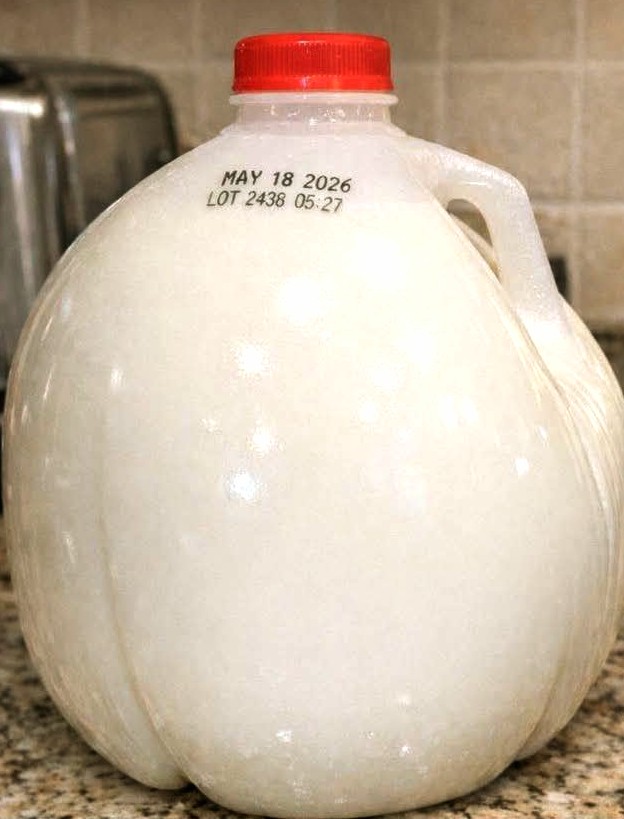
You reach into the refrigerator for a fresh gallon of milk, only to notice that the jug is swollen and feels tight like a drum. The expiration or sell-by date is still days away, so naturally you may wonder: Is the milk still safe to drink?
A swollen milk container should never be ignored. Although the printed date can provide useful information, it does not guarantee that milk is safe or fresh. Changes in storage temperature, contamination, or bacterial activity can cause milk to spoil earlier than expected.
Here’s what to know if you discover a bloated or swollen milk jug in your refrigerator.
1. A Swollen Milk Jug Is a Warning Sign
Milk containers normally should not become noticeably swollen or pressurized. When a jug expands, gas may have accumulated inside the container as microorganisms break down components of the milk.
That doesn’t necessarily tell you exactly which microorganism is responsible, but it does mean the milk has undergone an abnormal change.
The safest approach is to treat a significantly swollen milk jug as potentially spoiled and avoid drinking it.
2. The Date Doesn’t Guarantee Freshness
Many people assume milk is safe until the date printed on the container. That’s not necessarily true.
Dates such as “sell by” or “best by” generally provide guidance about quality and retail handling. Milk can deteriorate before that date if it has been stored improperly or exposed to conditions that encourage bacterial growth.
So if your milk jug is swollen, don’t rely on the date alone. The condition of the container is an important warning sign.
3. Don’t Immediately Open a Severely Swollen Jug
If the container is dramatically expanded, inspect it before opening.
Look for:
- A broken or damaged cap
- A leaking seal
- Cracks or punctures
- Unusual discoloration
- A container that is extremely firm or pressurized
If the jug appears compromised, don’t take unnecessary chances with the milk.
4. Don’t Taste Milk to Determine Whether It’s Safe
A common piece of advice is to smell milk and take a small sip if it looks normal. However, taste is not a reliable food-safety test.
Spoilage organisms can cause obvious changes in smell, appearance, or texture, but harmful microorganisms may not always make food look or smell bad.
If a milk jug is noticeably swollen, the safest choice is to discard or return it rather than taste-testing it.
5. What Causes Milk to Swell?
One possible cause is microbial activity.
Certain microorganisms can break down nutrients in milk and produce acids or gases. As gas accumulates inside a sealed container, pressure can build and cause the jug to expand.
Temperature abuse can make the problem worse. Milk should be kept properly refrigerated, and the refrigerator should remain at 40°F (4°C) or below.
Repeated temperature fluctuations can accelerate deterioration and shorten the milk’s usable life.
6. How to Tell If Milk Has Spoiled
Besides a swollen container, other common signs of spoiled milk include:
- A strong sour or unpleasant odor
- Lumps or curdling
- An unusual texture
- Discoloration
- A visibly separated or abnormal appearance
If you notice these changes, don’t drink the milk.
And remember: the absence of these signs doesn’t prove that milk is safe, especially when the container itself has become swollen.
7. Should You Throw It Away or Return It?
If you purchased milk that is still within its printed date but the container has become swollen, consider returning it to the store rather than simply throwing it away.
Take the container back with your receipt if you have it and explain what happened. The retailer may offer a replacement or refund.
If returning it isn’t practical, discard the milk safely. Don’t give questionable milk to children, pets, or other people.
8. Take Photos Before Discarding the Milk
If you believe the product may have a quality or packaging problem, document it first.
Take pictures showing:
- The swollen container
- The expiration or sell-by date
- The product or lot code
- The brand name
- Any damaged seal or packaging
- Your receipt, if available
This information can be useful when contacting the retailer or manufacturer.
9. When Should You Contact the Manufacturer?
If you repeatedly encounter swollen containers from the same brand, contact the manufacturer’s customer-service department.
Provide the product name, date code, lot number, purchase location, and photographs if requested.
If you believe there may be a broader food-safety issue, you can also contact the appropriate local food-safety or public-health authority.
10. Store Milk Properly to Keep It Fresh
Proper refrigeration is one of the best ways to protect milk quality.
Keep these habits in mind:
- Keep your refrigerator at 40°F (4°C) or below.
- Store milk toward the back of the refrigerator where temperatures are generally more stable.
- Avoid storing milk in the refrigerator door when possible.
- Return milk to the refrigerator promptly after pouring.
- Don’t leave milk sitting at room temperature for long periods.
- Keep the container tightly closed.
Good refrigeration practices can help slow bacterial growth and maintain milk quality.
11. What to Do the Next Time You Buy Milk
Before putting a gallon of milk in your shopping cart, check the container carefully.
Choose a jug that:
- Isn’t swollen or unusually firm
- Has an intact cap and seal
- Isn’t leaking
- Doesn’t have visible damage
- Has a reasonable date for your planned use
Once you get home, refrigerate the milk promptly.
Bottom Line
A swollen milk jug is a reason to be cautious, even when the printed date hasn’t passed. The swelling can indicate gas production associated with microbial activity or another problem with the product.
Don’t assume that milk is safe simply because the date looks good, and don’t rely on a taste test to determine safety. When in doubt, don’t drink it. Returning the product to the store or contacting the manufacturer is often the better option.
Benefits of Knowing the Signs
Understanding what a swollen milk jug can indicate can help you:
- Avoid drinking potentially spoiled milk
- Recognize unusual changes in dairy products
- Reduce the risk of foodborne illness
- Store milk more safely
- Know when to return a questionable product
- Prevent unnecessary food waste by identifying storage problems
Quick Safety Tip
If a milk jug is noticeably swollen, don’t assume it’s safe just because the date hasn’t passed. When something about the container looks or feels abnormal, the safest choice is to avoid consuming the product.
