

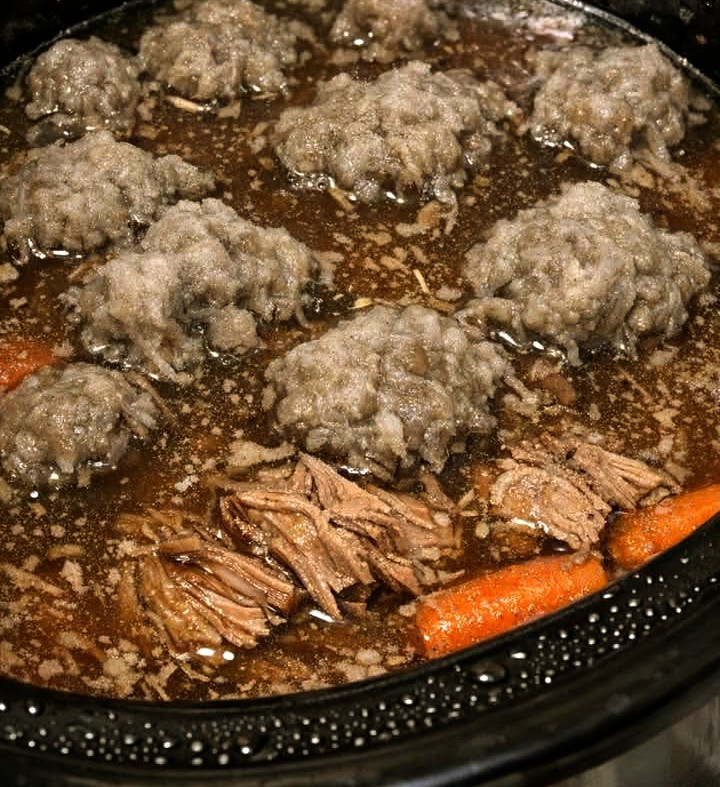
Weird Grayish-Brown Clumps in Pot Roast? Here’s What They Mean
Lifting the lid on a slow cooker pot roast should reveal tender meat and a rich, flavorful broth. But sometimes, you’re greeted with strange grayish-brown clumps floating on the surface often described as looking like dirty cotton balls or stringy blobs. While unsettling, these clumps are usually harmless and completely normal in slow-cooked beef dishes.
Before you throw the whole pot away, here’s what’s really happening and how to fix it.
What Are Those Grayish-Brown “Cotton Ball” Clumps?
In most cases, these odd-looking clumps are coagulated proteins, mainly collagen and rendered fat, released from the beef during long, slow cooking.
Why this happens:
Tough cuts of beef (like chuck roast) are rich in collagen
Slow cooking breaks collagen down into gelatin
As the broth cools slightly, gelatin and fat can clump together
Seasonings and meat juices give them a grayish-brown color
Good news: This is a normal chemical reaction not spoilage.
The Science Behind Collagen in Slow Cooker Pot Roast
Collagen is what makes pot roast so tender. When cooked low and slow:
Collagen converts into gelatin
Gelatin thickens the broth and adds richness
Sometimes it re-solidifies into stringy or fluffy clumps
This means your pot roast is actually doing what it’s supposed to do.
When These Clumps Are Totally Normal
Your pot roast is safe to eat if:
It smells savory and rich (not sour or rotten)
The meat looks normal and not slimy
There’s no mold or strange discoloration
The broth isn’t fizzy or bubbling unnaturally
In fact, gelatin-rich broth is a sign of a successful slow-cooked roast.
When You Should NOT Eat the Pot Roast
Throw it out if you notice:
Sour, ammonia-like, or rotten smell
Slimy meat texture
Mold growth
Fizzy or fermented liquid
When in doubt, always trust your senses.
How to Fix an Unappetizing Pot Roast (But Still Safe)
If the clumps look unpleasant but everything else checks out:
Easy solutions:
Skim floating clumps with a spoon
Strain broth through a fine-mesh sieve
Blend the broth for a smooth, rich gravy
Use a fat separator before serving
These steps improve texture without sacrificing flavor.
How to Prevent Weird Floating Bits Next Time
Sear the beef before slow cooking
Trim excess fat from the roast
Maintain a consistent low temperature
Stir occasionally during cooking
Avoid overly acidic liquids early in cooking
These tips help keep collagen evenly distributed.
Turn This “Mistake” Into the Perfect Pot Roast
Every slow cooker surprise is a learning moment. With the right cut of beef, proper searing, and steady heat, you’ll get:
Fork-tender meat
Rich, silky gravy
No mystery clumps
And next time you lift the lid, you’ll know exactly what you’re looking at.
Benefits of Gelatin-Rich Pot Roast:
Improves texture and tenderness
Adds natural richness without thickeners
Indicates successful collagen breakdown
Enhances mouthfeel and flavor
